


Many industrial manufacturing facilities struggle repeatedly with premature wear, dimensional deviation, and frequent replacement of mechanical core components. Most buyers only focus on surface prices when purchasing parts, ignoring material stability, forging process standards, and structural fatigue resistance. These hidden defects often cause unexpected production shutdowns, increased maintenance costs, and unstable product quality across entire assembly lines. Long-term improper selection also accelerates equipment aging, creating unnecessary safety risks that are difficult to detect in daily inspections.
Premium custom precision forged mechanical components solve these pain points from the source of production technology. Unlike ordinary stamped and cast parts, precision hot forging forms dense internal metal structures, greatly improving compressive strength, impact resistance and service life under continuous high-load operation. Strict dimensional tolerance control ensures perfect matching with original equipment, eliminates assembly gaps, and reduces abnormal friction and vibration damage during long-time operation. Professional customized specifications also adapt to complex working conditions including high temperature, low temperature, corrosion and heavy impact.
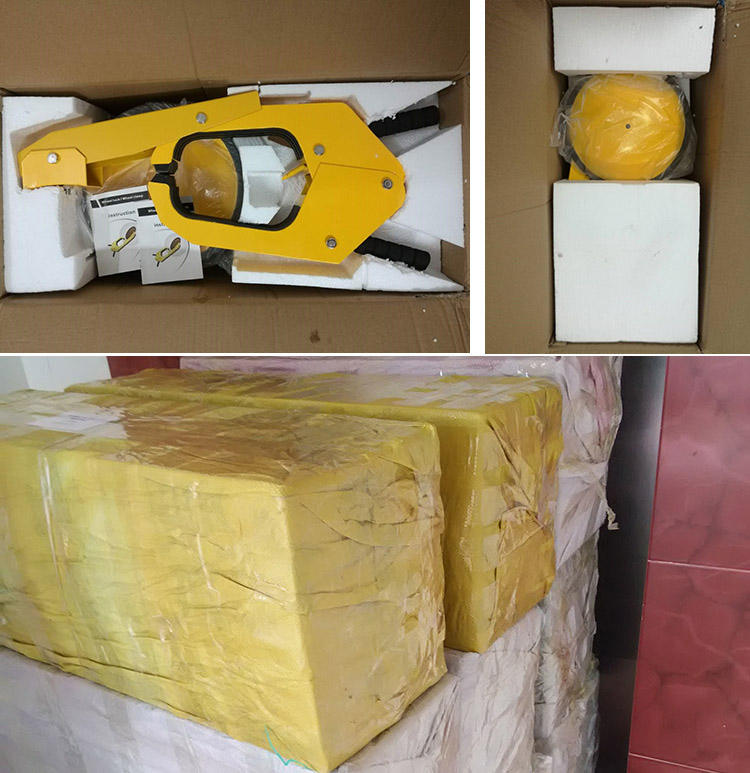
Reliable industrial component manufacturing enterprise adopts full-process quality testing from raw material incoming inspection to finished product delivery. Each batch of forged parts undergoes hardness testing, metallographic analysis, pressure resistance verification and appearance precision detection. Unqualified products are completely eliminated before leaving the factory, avoiding quality hidden dangers caused by unstable raw materials or incomplete processing technology. Standardized production management ensures consistent batch performance, which cannot be achieved by small scattered processing workshops with simple equipment.
Common misunderstandings among industrial buyers frequently lead to poor cost performance. A large number of customers believe that low-price cast parts can replace precision forged parts, but cast structures have loose internal grains, are prone to cracking and deformation under repeated stress, and need frequent maintenance and replacement. Others overlook surface treatment processes, resulting in rapid rust and wear in humid and corrosive working environments, which shortens actual service life by more than half. Ignoring matching accuracy will also cause abnormal wear of supporting equipment, expanding overall production losses far beyond the cost of parts themselves.
Deep-seated hidden problems behind inferior forged parts are rarely noticed by ordinary purchasers. Substandard forging temperature control leads to uneven material toughness, which easily causes sudden fracture during peak load operation. Unfinished precision machining causes cumulative errors during equipment operation, damaging matching shafts, bearings and other supporting accessories. Lack of anti-corrosion and wear-resistant surface treatment accelerates structural aging, and irregular batch quality leads to unstable assembly efficiency, seriously affecting the overall yield and delivery cycle of finished mechanical products.
Performance Comparison Between Precision Forged Parts & Traditional Cast Parts
| Performance Index | High Precision Forged Parts | Ordinary Cast Parts |
|---|---|---|
| Internal Metal Structure | Dense and uniform grain structure | Loose and porous internal structure |
| Impact Resistance | Extremely high, suitable for frequent heavy load | Poor, easy to crack under shock load |
| Service Life Under Continuous Operation | 3–5 times longer | Short, frequent replacement required |
| Dimensional Tolerance Accuracy | Ultra-high precision matching | Large deviation, easy assembly mismatch |
| High Temperature Adaptability | Stable performance at continuous high temperature | Deformation and failure easily occur |
| Corrosion Resistance | Strong with professional surface treatment | Poor, rapid rust and damage in harsh environments |
Practical application experience proves that selecting qualified precision forged parts directly reduces comprehensive enterprise operating costs. Although the unit price is slightly higher than low-quality substitutes, the greatly extended service life, reduced maintenance frequency, fewer production failures and protected supporting equipment all bring obvious long-term economic benefits. Stable component quality also improves the overall grade and market competitiveness of finished mechanical products, helping enterprises gain advantages in long-term market cooperation.
Harsh working conditions put higher requirements on component comprehensive performance. Whether in mining machinery, engineering equipment, transmission machinery or heavy-duty mechanical transmission systems, precision forged components can maintain stable operation under high pressure, frequent impact and complex environmental changes. Reasonable structural optimization design further reduces energy consumption during operation, improves mechanical transmission efficiency, and helps enterprises achieve energy-saving and consumption-reducing production goals.
Standard after-sales technical matching service also improves actual use value of finished parts. Professional technicians provide size confirmation, parameter matching and installation guidance according to actual equipment models, avoiding inappropriate selection caused by blind purchasing. Complete quality guarantee mechanisms respond quickly to usage problems, protecting continuous stable production of customer workshops and eliminating worries about subsequent use and maintenance.
In long-term industrial production, component quality determines the stability of the entire production chain. Choosing scientifically processed, high-density, high-precision forged parts is not a simple procurement choice, but a key layout to reduce comprehensive costs, ensure production safety and stabilize product quality. Avoiding superficial price comparisons and focusing on process quality, material performance and practical durability can fundamentally solve frequent faults and low efficiency problems plaguing mechanical production.